




Before designing an in-store point-of-purchase display, you’ll need to define your goals, timelines, retail requirements and measurements so your ideas move efficiently from concept to shelf. Doing so requires a strategic roadmap known as a design brief.
What Is a Design Brief?
A well-crafted POP display design brief eliminates confusion, accelerates decision-making and ensures your team designs for real-world retail conditions. Start by defining the display’s purpose and execution, then build on that foundation, translating strategy into shopper-facing storytelling through audience insights and visual direction.
You will need quick approvals to prevent delays and move your in-store display brief forward, so get stakeholder buy-in and review timelines, particularly during resets and seasonal windows. Define your goals — do you want to boost sales, expand brand visibility or improve your customers’ experience? This information will connect creative choices to direct outcomes.
Specify retailer rules, power availability, safety/load and floor location to eliminate the need for last-minute redesigns. Use shopper insights to connect design, messaging and placement to real buying behaviors. Lastly, plan measurement and documentation up front so you can tell a compelling post-launch performance story. Consider award entries as added proof.
How to Write a Design Brief
A strategically oriented design brief translates business goals into actionable requirements, constraints and success criteria that get the entire team on the same page. Use the following eight-step checklist as the starting point for your creative brief template.
1. Shopper and Category Insights
Understanding the evolving in-store shopping landscape will help you execute campaigns based on mission, potential barriers and triggers in your category.
Capture insights like these:
- Target shopper: Define your ideal audience based on factors such as demographics and pain points.
- Category context: Establish price tiers, top benefits and adjacent categories.
- Seasonal dynamics: Account for special occasions like holidays or back-to-school season.
- Motivators and barriers: Understand why people choose to buy your products or the reasons they might hesitate.
2. Product and Merchandising Requirements
Structural and graphic choices should position your products in the best light, encouraging shoppers to interact with your display.
The display must support clearly defined SKUs and facings, including:
- The full item list
- Pack sizes
- Facings per SKU
- Total capacity
Specify weight and security requirements like unit and shelf load tolerances, anti-sweep or product protection needs and tethering. Next, outline shopper accessibility, including product handling considerations and whether the unit is accessible from one or multiple sides. Note accessories or demos like try‑me features, literature holders or tester management.
Finally, document the refill method and frequency with step-by-step instructions for associates.
3. Retail Environment and Compliance
Your POP display’s design brief should specify the rules of its intended retail environment to avoid rework. Include details about the following parameters.
- Placement and footprint: Understand space management in retail and plan your display for aisle, front action alley, checkout zone or a pallet zone. Include maximum height, width and depth.
- Power and lighting: Verify power availability and the possibility of integrated lighting.
- Safety and load: Nail down stability, tip resistance and material safety standards.
- Signage rules: Establish header sizes, claim limits and co-brand requirements.
- Delivery format: Stipulate your preferences for prepackaged or flat-pack delivery, and outline store execution constraints. You can also outsource project management of your retail display to experts, allowing you to focus on other aspects of your business.
4. Structure, Materials and Sustainability
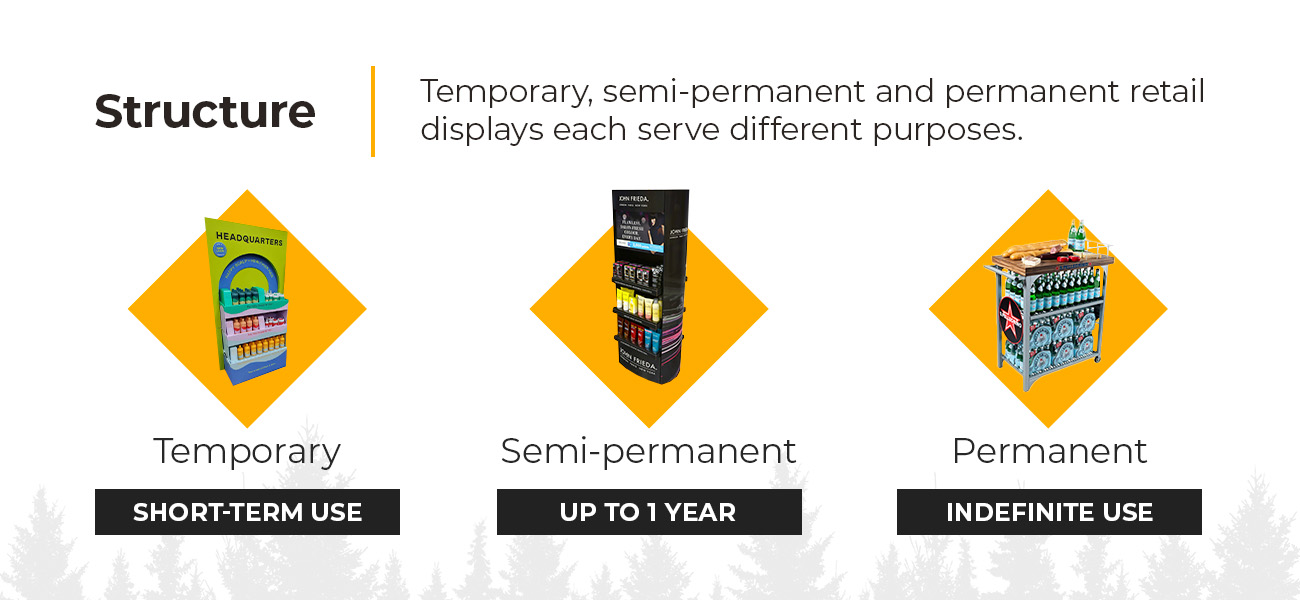
These choices set the foundation for cost, longevity and brand consistency, so begin by selecting the display type that matches your campaign length and durability needs. Temporary, semi-permanent and permanent retail displays each serve different purposes. Choosing the correct path eliminates the need for multiple revisions.
From there, define your sustainability goals. Corrugated structures are recyclable and made from recycled content. You can specify end-of-life preferences and recovery expectations in your in-store display brief. To balance performance and aesthetics, outline a mixed‑material strategy that uses metal for strength, wood accents for warmth and paper‑based graphics for seasonal refreshes where appropriate.
With the structural direction set, capture finish and quality cues that elevate perceived value and protect your brand. Specify surface finishes, fasteners and signature elements so the final unit signals quality at a glance. Finally, holistically assess cost‑to‑serve. Balance durability with freight density, targeted assembly time and replenishment effort to ensure the design fits your budget while remaining practical for store execution and ongoing maintenance.
5. Graphics and Brand Guardrails
Innovative visual merchandise displays succeed the moment they draw attention. Decide which assets will inform the creative brief for the product display:
- Specify your messaging hierarchy — lead benefit, secondary claims and proof points.
- Include all logos, certifications, legal copy and claim validation.
- Define the color palette, imagery style, iconography and typography.
- Provide precise dimensions, bleed requirements, color profiles and the designated handoff platform.
- Identify the legal and brand reviewers and the timing for each checkpoint in the process.
6. Packaging and Logistics
Retail design fails without smooth execution. Decide whether to ship your campaign as prepackaged or flat-packed displays, weighing assembly speed against freight efficiency.
Next, define assembly time goals for in-store teams and clarify who is responsible for packing out, whether that is a member of your internal team or your POP display partner. Document the required standard operating procedures to maintain consistency across shipments.
Detail palletization and labeling requirements, including the pallet pattern, label specifications and routing instructions needed to move through distribution without delays. Provide concise instructions in printed form and QR‑linked videos to guide assembly and replenishment on the floor.
Finally, plan the replenishment cycles and outline end‑of‑life handling, including who is responsible for removing, breaking down and recycling the unit.
7. Budget and Timeline
Clarity prevents scope creep and missed resets. Outline constraints and milestones like these.
- Budget bands: Set target and stretch budgets to guide options. Note cost drivers like materials, print method, pack‑out, freight and installation. Include contingencies for testing or retailer-requested changes.
- Timelines: Map phases and their durations. Include time buffers for approvals and retail constraints.
- Retail windows: Document relevant dates, seasonal timelines, blackout periods and distribution milestones by account or region to align arrival, staging and execution align with store calendars.
- Review methods: Who decides and advises? What does your team need to expedite proof approval?
- Change control: Define requests, evaluations and approvals of late-stage changes. Account for scope, cost and timeline impact assessments, deadlines and the escalation path for exceptions.
Your No-Guess Design Brief
Great Northern Instore partners with brands to translate their goals into impactful retail displays. We take projects from concept to distribution under one roof, starting with building an insight‑led brief together.
We strengthen early-stage decisions with shopper tools using visual attention prediction and field audits to validate concepts before production, leveraging our Shopper Insights capabilities. From there, the structural depth of our display solutions comes into play. We have more than 100 designers and engineers on staff, whose mixed‑material expertise lets them create results that balance durability, cost and brand feel.
Our proven project management approach guides execution in integrated manufacturing, quality assurance and distribution. Finally, we provide proof of performance through award‑winning work and measurable results.
Bring Your Vision to Life With Great Northern Instore
A thorough design brief does three things well — defines outcomes, aligns people and timelines and anticipates real-world retail execution. Follow our advice on how to create a design brief for your in-store display to reduce rework, speed approvals and increase shopper impact.
Ready to move forward confidently? Share your draft brief for a quick expert review, or contact our team to co-author the brief and deliver a production-ready program that performs for retail.